Owner Education / Furnished Rentals
What Makes a Good Midterm Rental on Oʻahu?
Why a house in ʻEwa Beach can outperform a unit in town, and the everyday details that decide whether someone will want to live in your home for a month or more.
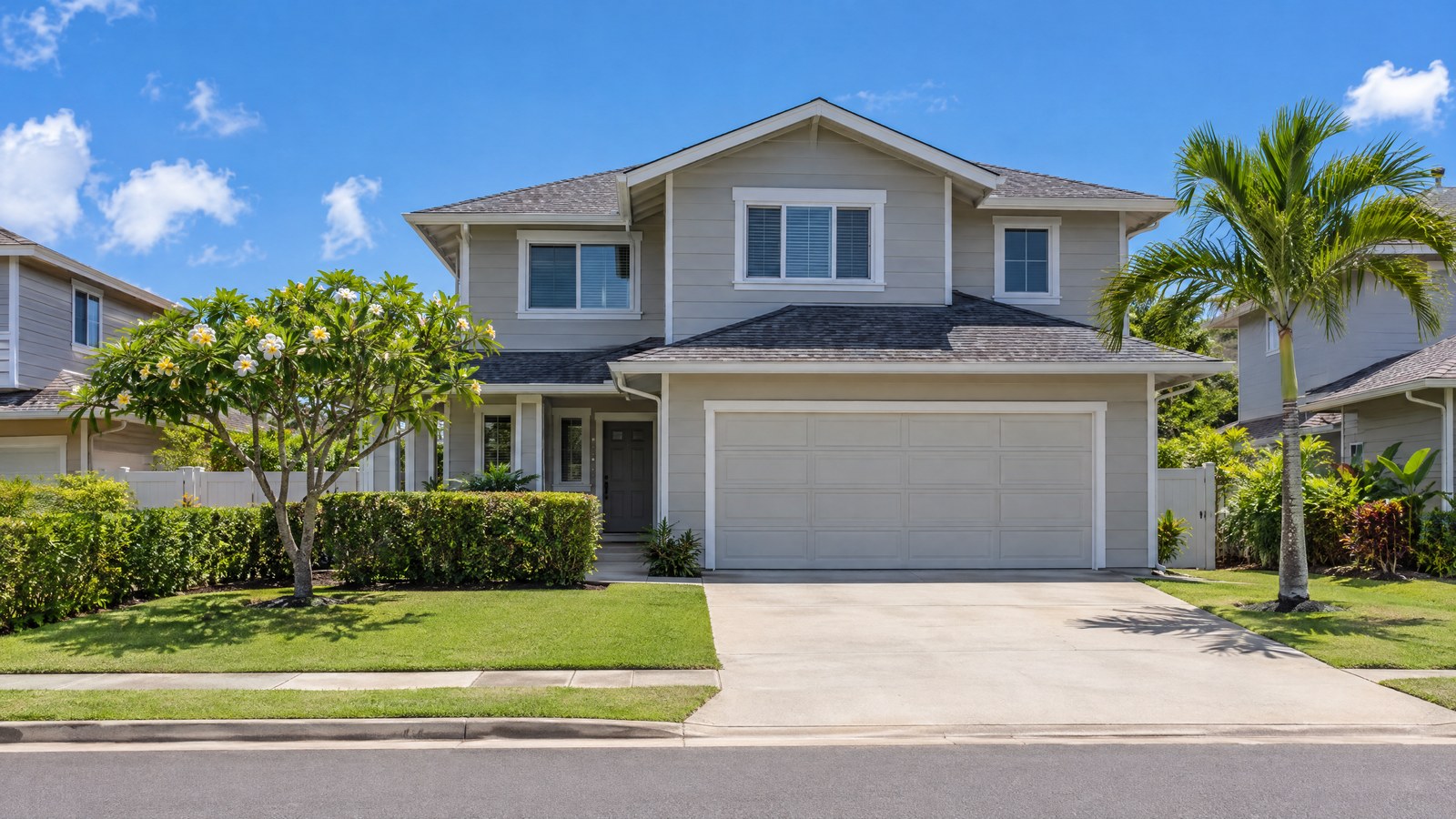
Imagine you own two rentals on Oʻahu and you want to furnish one of them for people who stay a month or longer. The first is a one-bedroom in an older three-story walk-up in town, a short drive from downtown Honolulu. It has no assigned parking, the washers are in a shared room on the ground floor, and the building has no pool, gym or other amenities. The second is a three-bedroom house in ʻEwa Beach with a two-car garage, a washer and dryer inside, and a small yard.
Many owners would bet on the first. It is closer to the jobs, the hospitals and the places visitors know by name, and it looks like what most people picture when they picture a furnished rental in Honolulu.
In my experience, the house in ʻEwa Beach is the better midterm rental, and the walk-up is one of the harder homes to rent this way. The reason starts with what the renter is doing. Someone who books a month or three is choosing where to live for a while. They will do laundry every week, park every night, cook most of their meals, carry groceries up to the door and drive to the same job each morning. A home that is charming for four nights can wear on someone by the fourth week.
So a good midterm rental on Oʻahu is a home that makes ordinary daily life easy. That means a washer and dryer inside, parking almost anywhere outside the urban core, a location that works for the renter's commute rather than for sightseeing, and enough room and comfort to live in. The rest of this article looks at why each of those matters here, where the exceptions are, and which rules to check before you list.
Who rents a furnished home for a month or more
It helps to picture the renter. The people who take a furnished home for a month or more are living on Oʻahu temporarily, for a stretch of time with a known end. Some are clinicians on temporary contracts at the island's hospitals. Some are military households, and the state's data book counts 44,604 active-duty personnel assigned in Hawaiʻi as of September 30, 2024. Others are relocating for work and still looking for a permanent home.
What these renters share matters more than who they are. Each will spend weeks going from your home to the same workplace and back, and weeks of weekday evenings inside it. That is the lens for everything that follows.
Laundry is the first thing a month exposes
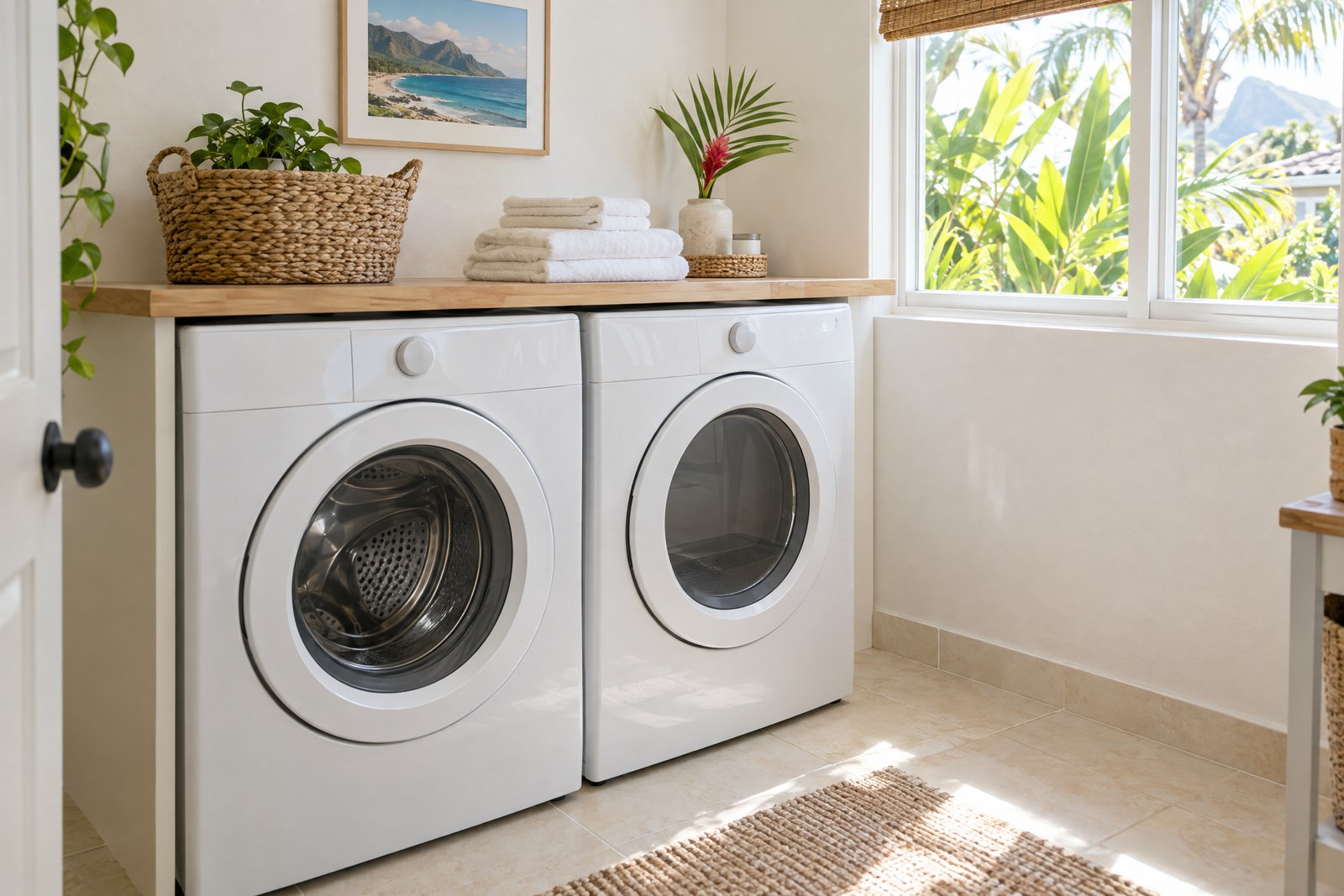
On a four-night trip, laundry is easy to ignore. Over a month, a renter will do it every week or so, and the difference between a washer in the hallway closet and a shared room downstairs gets larger every time. In a walk-up, it means carrying a basket down the stairs and back, waiting for a free machine, and planning evenings around it.
In my experience, properties without laundry inside do not make good midterm rentals, and I would put in-unit laundry at the top of any owner's list. A building with reliable machines on every floor is better than a trip to the laundromat, and for one person on a short contract it may be enough. When a renter is choosing between two otherwise similar homes, though, the one with a washer and dryer inside starts with an advantage.
Parking, and where it stops being optional
Parking is the point where Oʻahu's geography starts to matter. Outside the urban core, I treat parking as a requirement.
Census figures show why. In the U.S. Census Bureau's 2020 to 2024 American Community Survey estimates, only 4.1 percent of households in the ʻEwa Beach census area have no vehicle, and 38.4 percent have three or more. In Urban Honolulu, 16.6 percent of households have no vehicle. A renter settling on the west side will almost always need a car, and somewhere to put it every night.
Town is where the exception lives. Under Ordinance 20-41, adopted in 2020, the City stopped requiring off-street parking in the Primary Urban Center outside its residential, agricultural and preservation districts, and within half a mile of a rail station. As a result, some town buildings have few stalls or none. A unit without a stall can still work for a renter who plans to live without a car, close to their job and to transit. Even there, an assigned stall widens the pool of people who can say yes, so if your building lets you include one, include it.
Why a house in ʻEwa Beach keeps working
This is where the house from the opening comes in. In my experience, single-family homes in ʻEwa Beach are some of the best midterm candidates on the island. Public data cannot prove why, but it points in a consistent direction.
ʻEwa Beach is house country. In the same Census estimates, 74.8 percent of homes in the ʻEwa Beach area are detached single-family houses, compared with 27.1 percent in Urban Honolulu, and the average household there is 4.2 people. Those figures describe the neighborhood. The link to renters comes from my own experience: laundry inside and a place to park are close to essential for someone living in a home for a month or more, and a neighborhood built mostly of houses is a good place to find both.
Some of the work these renters come for is nearby. The Queen's Medical Center West Oʻahu opened in ʻEwa Beach in 2014 to serve what Queen's called the fastest growing region in Hawaiʻi. The City's planning documents have long designated ʻEwa, centered on Kapolei, as Oʻahu's secondary urban center. In neighboring Ocean Pointe, the Census estimates that 12 percent of residents aged 16 and over serve in the armed forces.
There is a limit worth knowing. The average commute for ʻEwa Beach residents is 38 minutes, against about 22 in Urban Honolulu. A house in ʻEwa Beach is a strong fit for a renter who works on the west side or at Pearl Harbor-Hickam, and a weaker one for someone commuting to downtown every day.
The walk-up problem
Now go back to the walk-up. In my experience, walk-up buildings without a pool or other amenities do not make good midterm rentals. I have not found public data that measures this, but the reasoning is easy to follow.
A walk-up asks more of a long-stay renter in small ways that add up: luggage up the stairs on the first day, groceries up the stairs every week, laundry down and back. In a building with a pool, a gym or a shared lanai, the amenities give something back, and they stand in for the yard and garage a house provides. In a walk-up with none of those, the renter is paying to live with the inconvenience and getting nothing to offset it.
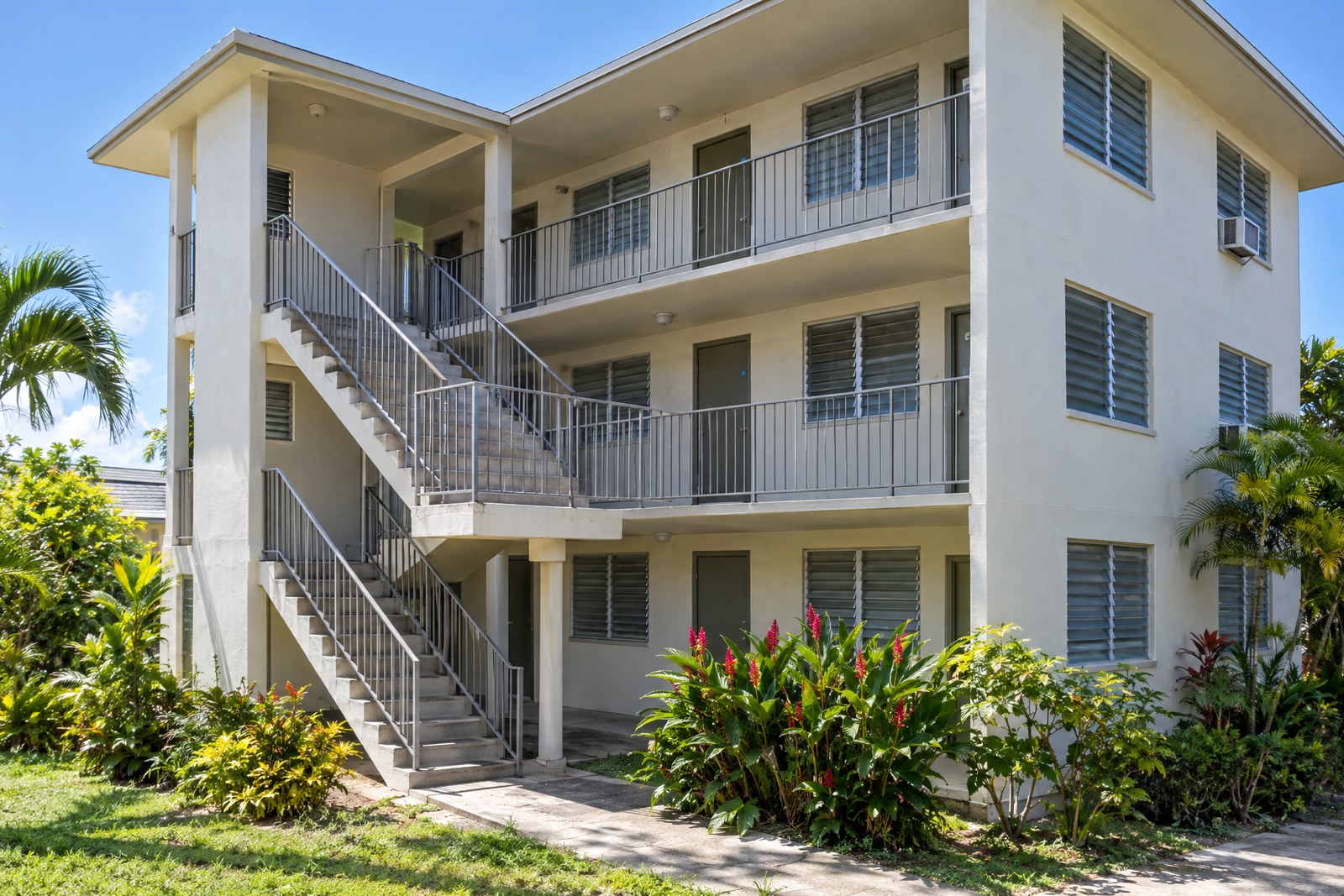
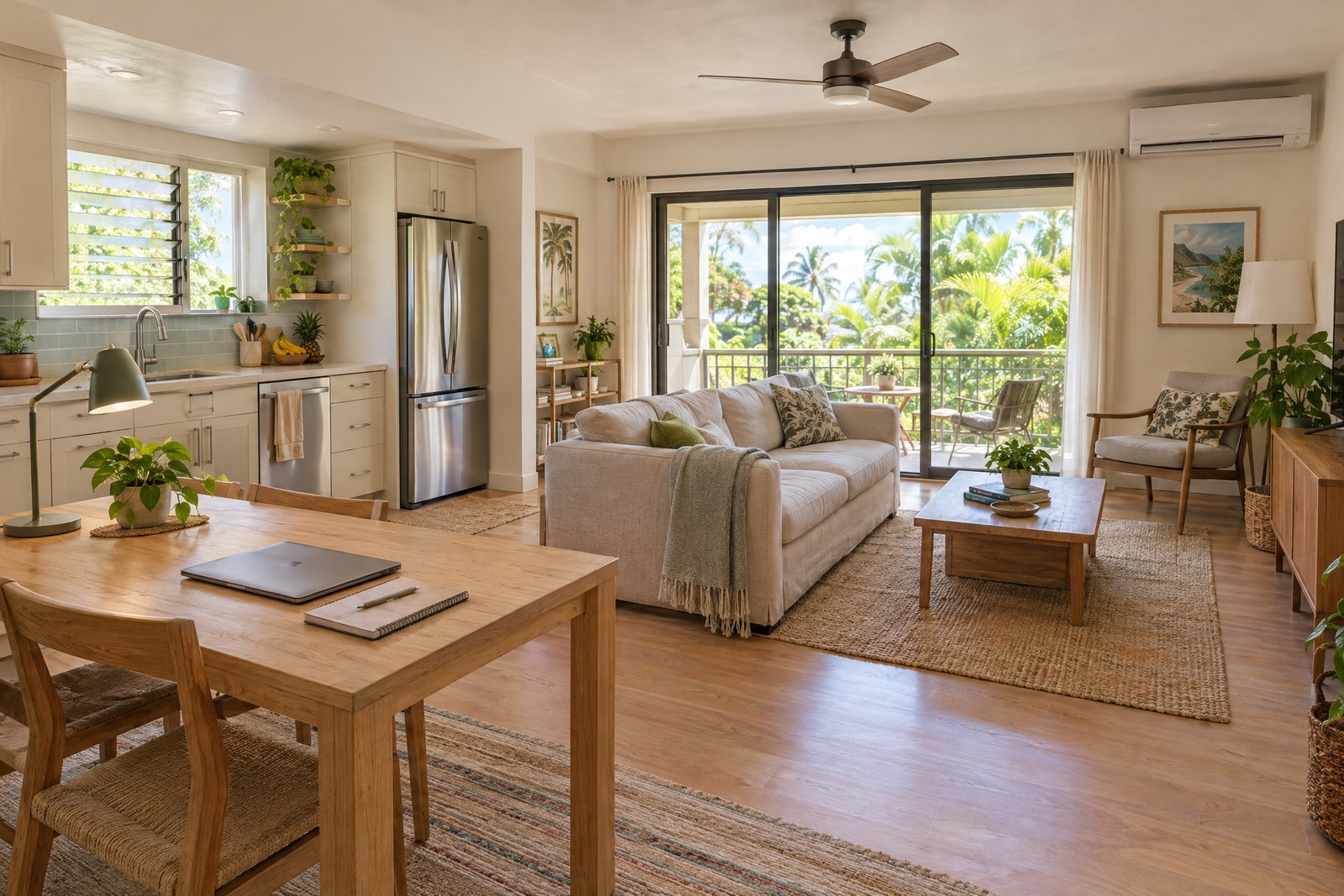
That also tells you where the exceptions are. A walk-up unit with a washer and dryer inside, an assigned stall, air conditioning and a short walk to a hospital or a large employer can suit one person on a work contract. Every item on the list you can check off makes the stairs matter less.
The same logic applies inside the unit. Air conditioning matters more across a Honolulu summer month than across a long weekend. A real table to work at, reliable internet, a fully equipped kitchen and closet space for a few months of clothes are what separate a home someone can settle into from a place built for a short visit.
The rules to check before you list
Whatever your home's strengths, confirm what it is allowed to do. Oʻahu's rental rules have changed over time, and what applies can depend on the property itself and, in a condominium or planned community, on the association.
Before you furnish or advertise the home, confirm the current City requirements for your specific property with the Department of Planning and Permitting. Check whether the state transient accommodations tax and the City's Oʻahu transient accommodations tax apply to your rentals, in addition to general excise tax. Where they do, state law requires your advertisements to show the registration number and a local contact.
In a condominium or planned community, read the declaration, bylaws and house rules for any minimum lease term the association sets. Then get current advice on your specific home before you list it.
How to read your own home
If you are deciding whether your home is a candidate, these are the questions that matter most, roughly in order.
| Question | Why it matters for a month-long stay |
|---|---|
| Is there a washer and dryer inside the unit? | A renter will do laundry every week for the length of the stay. |
| Is there assigned parking? | Outside the urban core, most renters will have a car every day. |
| Who would commute from here, and to where? | Location works when it suits a daily commute to hospitals, bases or offices. |
| How many stairs, and is there an elevator? | Luggage, groceries and laundry all travel the same route. |
| What does the building give back? | A pool, gym or shared space helps offset the compromises of condo living. |
| Can someone live here, or only visit? | Air conditioning, a place to work, a full kitchen and storage decide comfort over weeks. |
| What do the City, the tax rules and your association allow? | Confirm the current City requirements for your property, the taxes that apply and any association minimum lease term before you list. |
What the two homes tell us
Go back to the two homes from the opening. The walk-up in town is closer to more places. The house in ʻEwa Beach is closer to the life a month-long renter actually lives: a car in the garage, laundry down the hall, room for the family and a commute that works for the jobs nearby. When you ask whether your home is a good midterm rental, ask whether someone could live an ordinary week there without having to plan around the laundry, the parking or the stairs. If your home clears those everyday questions, furnishing, pricing and the rules for your building come next. If it does not, a standard long-term lease may serve it better.
Common questions
What makes a good midterm rental on Oʻahu?
A home that makes ordinary daily life easy for someone who will live there for a month or more. Vacation appeal matters less than the everyday details: a washer and dryer inside, parking, a practical commute to where the renter works, few stairs or an elevator, air conditioning, a place to work, a full kitchen and storage. In my experience, a suburban house with those basics can be a stronger candidate than a unit in town without them.
Is parking necessary for a midterm rental on Oʻahu?
Outside the urban core, I treat parking as a requirement. Census estimates show only about 4 percent of households in the ʻEwa Beach area have no vehicle, so a renter settling there will almost always need a car. Town is different: some Honolulu buildings have few stalls or none, and a unit without parking can work for a renter who will live without a car near work and transit. An assigned stall still widens the pool.
Does a midterm rental need in-unit laundry?
In my experience, homes without laundry inside do not make good midterm rentals. Someone staying a month or more does laundry every week, and shared machines downstairs turn that into a regular chore. Reliable machines on every floor may be enough for one person on a short contract, but when a renter compares two similar homes, the one with a washer and dryer inside starts with an advantage.
Is ʻEwa Beach a good location for a midterm rental?
It can be. In my experience, single-family homes in ʻEwa Beach are some of the best midterm candidates on the island. The area is mostly detached houses, households there are larger and depend on cars, and Queen's Medical Center West Oʻahu is in ʻEwa Beach. The tradeoff is the commute, about 38 minutes on average against about 22 in Urban Honolulu, so it suits renters who work on the west side better than daily downtown commuters.
Can a condo or walk-up work as a midterm rental?
Yes, depending on the combination. A condo with laundry inside, an assigned stall, an elevator and amenities such as a pool or gym has a much better chance. In my experience, walk-up buildings without a pool or other amenities are difficult midterm candidates, because luggage, groceries and laundry all travel the stairs. A walk-up unit with laundry inside, parking, air conditioning and a short walk to a hospital or large employer can still suit one person on a work contract.
Talk to us about your home
If you are wondering whether your Oʻahu home would work as a furnished rental for stays of a month or more, we can look at it with you, from parking and laundry to your building's rules. Learn more about our furnished corporate rental management, or get in touch for a rental analysis.
Sources
- City and County of Honolulu, Department of Planning and Permitting, Short-Term Rentals, accessed September 29, 2026
- City and County of Honolulu, Ordinance 20-41, relating to off-street parking and loading
- Hawaiʻi Revised Statutes §237D-1 and §237D-4, transient accommodations tax
- City and County of Honolulu, Department of Budget and Fiscal Services, Oʻahu Transient Accommodations Tax FAQ, revised January 2026
- U.S. Census Bureau, American Community Survey 2020 to 2024 5-year estimates, tables DP02, DP03 and DP04, for the Ewa Beach, Ocean Pointe and Urban Honolulu census-designated places
- Hawaiʻi DBEDT, State of Hawaiʻi Data Book 2024, Table 10.02, active-duty military personnel
- The Queen's Health Systems, About The Queen's Medical Center West Oʻahu
- City and County of Honolulu, ʻEwa Development Plan, 2013
This article is general information about Oʻahu rental property as of September 2026 and is not legal or tax advice. Rules on stay length, taxes and association requirements change and depend on your specific property, so confirm them with the City, the Department of Taxation, your association and a qualified professional before you rent.


