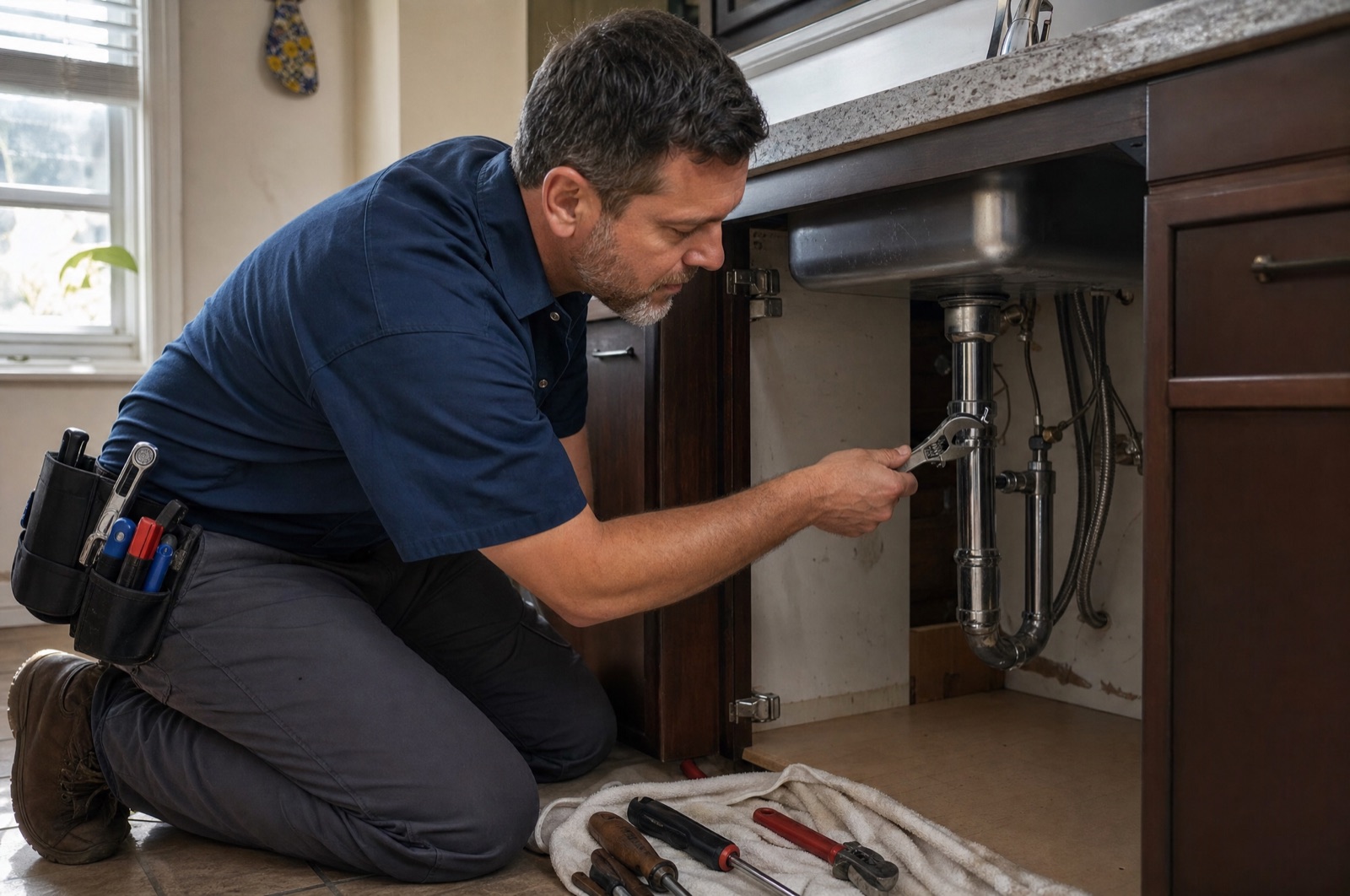
Hands-on rental owners often raise costs and slow repairs without realizing it. Here is the line between healthy oversight and operational interference, and why letting your Honolulu property manager run the day-to-day is what actually pays off.
Owner Education · Honolulu
Let Your Property Manager Do the Work:Why Over-Involved Owners Often Earn Less
A practical guide for Oahu rental owners on where hands-on involvement creates value, and where stepping into the day-to-day quietly raises costs.
By Hal Wilkerson · Hawaii Coastal Property ManagementPublished June 2026
Most owners who get deeply involved in the day-to-day of their rental are doing it for good reasons. They want to help. They want to save money. They want to stay close to an asset that matters. None of that is unreasonable.
But there is a counterintuitive pattern we see again and again: the more an owner steps into the operational seat, the more the property tends to cost to run, and the less smoothly it performs. The damage is rarely obvious in the moment, because each individual intervention looks small and sensible. It is the accumulation that hurts.
This is not an argument for owners to go silent or hands-off on the decisions that are genuinely theirs. It is an argument about where your involvement creates value versus where it quietly destroys it.
Coordination is the work you are paying for. A repair that is sourced, dispatched, and closed in one motion never lands on your desk.
The key distinction
Oversight is good. Operational interference is the problem.
There is an important line here, and blurring it is where most of the trouble starts.
Oversight is the owner doing their job as the principal: reviewing monthly statements, setting a maintenance approval threshold (anything over $500 needs your sign-off), reading inspection reports, and asking direct questions when something looks off. This is healthy. We want owners who read their statements. It keeps everyone sharp and it is how a good manager earns trust over time. Professional managers operate under a national code of ethics through NARPM precisely because that accountability is the point.
Operational interference is different. It is the owner stepping into the workflow itself: cold-calling vendors, hunting for one-off bargain quotes, inserting "I have a guy for that" into a process that is already running. That is not oversight. That is doing the manager job for them, usually slower and at higher real cost.
The Bottom Line
Oversight is setting goals, thresholds, and reading the reports. Interference is running a second management operation alongside the one you already hired.
The vendor network
Why a manager vendors are cheaper, and better
A property manager vendor network is built on consistent, repeat work. Those vendors know we will send them a steady stream of jobs, so they price accordingly, and the savings are passed through to owners. The same dynamic shows up across industries: when you consolidate spend with a smaller set of trusted vendors, you unlock negotiated rates that one-off buyers simply cannot access. When an owner goes out and hunts for the cheapest bid, the math often works against them in ways that are not visible on the invoice.
01
The low bid is a sales tactic, not a value signal
A newer or hungry vendor may quote aggressively to win the job. That tells you they want the work, not that they are the right vendor, and not that they have ever been vetted.
02
A cold caller has no leverage
A vendor who does not know you and will not see you again has little reason to give you their best price, their best crew, or their best follow-up.
03
Accountability evaporates
This is the one that costs owners the most. When we find a problem with a vendor work, the relationship and the volume of business get it made right. An owner who hired a stranger off a cheap quote has none of that leverage and is often stuck eating it or paying twice.
The owners who sleep best are the ones reading a clear monthly statement, not the ones chasing three quotes for a faucet.
Cheap-up-front frequently becomes expensive-overall once you price in rework, callbacks, and the hours spent chasing a vendor who has no incentive to care.
Beyond cost, there is a subtler effect. The moment an owner inserts themselves into an active process, they open a new timeline of work that would not otherwise exist. A simple repair that would have been dispatched, completed, and closed in one motion now becomes a vendor introduction, a new quote, a comparison, a scheduling round-trip, a question about scope, and a follow-up loop, often routed through the owner, who has a day job. The task did not get smaller. It multiplied, and it slowed down.
Multiply that across a year of maintenance items and you understand why hands-on owners frequently end up with more headaches, higher spend, and a property that runs less smoothly than the one down the street with a fully delegated manager.
A vetted vendor with a standing relationship shows up, fixes the real problem, and stands behind the work. A one-off bargain hire rarely does all three.
The healthy version
What good owner involvement actually looks like
Delegating the operations does not mean disappearing. The owners who get the best results from us tend to do four things, and only these four.
Everything else, sourcing, vetting, dispatching, negotiating, chasing, closing, is ours. That is the work you are paying for, and it is the work our systems and relationships are built to do.
We are always open to a vendor you love. Introduce them and we will bring them into the process the right way.
The four owner jobs
Set the strategy. Tell us your goals, budget ceilings, risk tolerance, and any sensitivities. When we know these up front, we can honor them on every decision without checking back each time.
There is an approval threshold, trust it. Our recommended approval threshold is $500.
Read the reporting. Monthly statements, income and expense detail, inspection photos. They are there so you can verify, not manage.
Ask, do not quarterback. Call us anytime with questions. The difference is asking how the water-heater situation is going versus calling three plumbers yourself.
A note on fit
This model is not for every owner, and that is by design.
We will be candid, because it saves everyone time. Some owners genuinely want to stay in the operational seat, and there are excellent managers built for that style. We are not one of them.
Our clients are owners who are ready to hand off the phone calls, the invoices, and the round-the-clock headaches and let a professional team run the property. They sleep better, they spend less time, and their properties tend to perform better for exactly that reason. If that is the kind of ownership experience you want, we are probably a great fit.
You bought an investment, not a second job.
If you are tired of being your own property manager, or you never wanted the job in the first place, let us talk. We will give you a straightforward picture of what your property should earn and exactly what we would handle so you do not have to.
5-star reviews with written feedback, shown in the order Google provides them. Our overall Google rating is based on all 53 reviews.
Elizabeth
★★★★★
I was referred to Hal by someone I know and I’m really glad I decided to work with him as my property manager. Having dealt with other property managers before, I can genuinely say that Hal stands out, especially when it comes to professionalism, transparency and the way he handles his contracts.
From the very beginning Hal has been professional, pleasant, welcoming and easy to work with. He is very forthcoming about the contract, explains everything clearly and makes sure you understand exactly what you’re agreeing to. There are no hidden costs or unpleasant surprises, which is something I particularly value and that, in my experience, sets him apart from other property managers.
He is trustworthy, reliable, and responsive, with several communication options available to make the process as smooth as possible. He also communicates and works exceptionally well with military members, understanding the importance of flexibility, clear communication and reliability.
Hal presented my property really well and found a tenant quickly. Throughout the entire process, he has made everything straightforward and stress-free.
I highly recommend Hal to anyone looking for a property manager who is professional, honest, transparent and genuinely easy to work with. It’s clear that he takes pride in what he does and I’m very happy to have him managing my property.
Maria Hanano
★★★★★
I was a tenant for a property managed by Hawaii Coastal Property. Working with them has been a very pleasant experience. They are kind, responsive, flexible, and understanding, while also being very professional and clean in their communication. I had some personal family emergencies that they took into account during the move-out process, making it much more manageable for me. I met Hal Wilkerson personally and he was nothing short of kind and professional. If I had a property, I would trust they would take great care of it.
Helen
★★★★★
We are absolutely thrilled with our decision to choose Hawaii Coastal Property Management! Hal, the owner, is exceptional. He is trustworthy, attentive, proactive, and incredibly easy to work with. His background and experience also tell you he knows very well what he is doing. From the very beginning, his positive energy and personality made us feel confident that our property is in excellent hands.
His team is equally impressive. Everyone we’ve worked with has been warm, professional, knowledgeable, and remarkably responsive. Communication is prompt and clear, questions and tenant issues are handled quickly, and they genuinely go above and beyond to make the entire process seamless.
Hal and his team have given us tremendous peace of mind, and we couldn’t be happier with the level of care and service we’ve received. Highly, highly recommend!
Aldous Strauch
★★★★★
This property management company followed through on everything they stated pre lease! Quick response to any issues . Hal and Allison are the best!
Dane Nk
★★★★★
Hal Wilkerson and the Hawaii Coastal Property Management team have been a dream to work with as a renter.
So much so that we plan to use them to manage our own rental properties in the future.
They're kind, prompt, and exceptionally responsive.
Nothing but positive things to say.
Franklin
★★★★★
I was referred to Hal by one of his contractors last year in October 2025 because I needed a trusted Property Manager to handle our property in Ewa Beach, HI. Once we had gone over his and our responsibilities I knew we were getting the right guy along with his company to handle our property. Due to our connection with military service I knew I was in the right care for our home to be managed and handled the right way. My property was on the market for rent for 6 months with another Property Management and when Hal and his team took over it took less than a month to have renters oocupy the resident. Heather was also involved during the process and have had many contact with her handling our property and she is so transparent handling our Hawaii GE taxes and also any issues with the home. I can say that I have peace of mind knowing that our asset is being handled with care. Very professionaland and experienced in what they do. Awesome to have partnered with Hawaii Coastal Property Management.
Shayda Maruvy Blythe Casis
★★★★★
After working with two other property management companies and dealing with so many frustrations, finding Hawaii Coastal Property Management has truly been a blessing.
As a military family living in another state, we find that leaving our home behind is stressful and, honestly, a little scary. You need someone you can trust to take care of your property as if it were their own, and that's exactly what Hawaii Coastal and Mr. Hal have done for us.
They genuinely care about both their clients and their properties. They're easy to work with, always quick to respond, and, most importantly, our rental income is always paid on time. Every question we've had has been answered promptly, and they've handled everything professionally, making the entire process so much easier.
The peace of mind they've given our family is priceless. All the stress and worry we had after our previous experiences disappeared because we know our home is in good hands.
I would recommend Hawaii Coastal Property Management 1,000% to anyone looking for a property management company they can truly trust. Thank you for everything you do!
Living in Hawaii
★★★★★
Hawaii Coastal PM has provided me with the peace and confidence that my property is being cared for and delivering higher than expected results. They have rented my mid-term rental well above my expectations and within the terms I've made. Their accounting measures are tight and, when an issue arises they have promptly addressed and corrected it. They're responsive and accommodating to both the tenant and myself.
Background info: I am a real estate professional and have worked with numerous PMs.