Owner Education / Investing
Best Areas to Invest in Honolulu
Oahu is not one market. Here is how its neighborhoods actually differ, and the zoning rule that decides what you can do with the property once you own it.
Key Takeaways
- Oahu offers genuinely different investments at different budgets, from urban condos to windward single-family homes. Pick the neighborhood that matches your strategy rather than the one with the best headline.
- Demand comes from several independent sources — military postings, universities and hospitals, local professionals, and tourism — and they do not rise and fall together. Which one your property serves matters more than the island average.
- Yield and appreciation pull in opposite directions here. The lower entry prices on the west side generally buy cash flow; Kahala and Hawaii Kai generally buy equity growth instead.
- Zoning decides your strategy before you do. DPP permits short-term rentals only in resort-zoned areas and a couple of specific apartment-zoned areas, so on most of the island the floor is 30 consecutive days.
Oahu rewards investors who are specific. A thriving tourism economy, a large permanent military presence and a persistently limited housing supply keep demand strong across the island — but they do not keep it strong in the same way in every neighborhood, and the strategy that works in Waikiki will not work in Mililani.
What follows is a tour of the areas investors actually shortlist, grouped the way the island really works rather than as a flat ranking. If you are earlier in the process, start with our guide to buying an investment property in Honolulu.
Check This First
Zoning decides your strategy before you do
Before comparing neighborhoods, settle what you are allowed to do with the property. On Oahu the short-term rental question is answered by zoning, not by ambition.
The Department of Planning and Permitting permits short-term rentals — guest accommodation for less than 30 consecutive days — only in resort-zoned areas and a couple of specific apartment-zoned areas, mapped in Ordinance 25-52. That is a small share of the island's housing. Everywhere else, 30 consecutive days is the floor.
Check this with DPP, not with a blog
The Department of Planning and Permitting defines a short-term rental as guest accommodation for less than 30 consecutive days, and states that STRs are only permitted in resort-zoned areas and a couple of specific apartment-zoned areas, which are mapped in Ordinance 25-52. A unit in an STR-eligible area being let for less than 30 days must be registered, and DPP is explicit that the STR must be registered to be in compliance with law. Properties that are not registered are required to state that they may not be rented for less than 30 consecutive days. Rules here change, and a lot of published guidance is out of date — confirm the current position for your specific property with DPP before you buy.
Two further checks are worth making on any condo. The building's AOAO can prohibit short-term letting even where zoning would allow it, and some buildings restrict rentals below a fixed term regardless of what the city permits. Read the house rules, not just the zoning map.
The Urban Core
Downtown, Metro Honolulu and Waikiki
Downtown Honolulu is the island's business, government and legal center, and its housing is predominantly high-rise condominium with a scattering of historic and newer mixed-use buildings. Demand comes from professionals and government workers and holds steady year-round rather than seasonally, which is the main attraction: it is one of the few Oahu submarkets where vacancy is driven by pricing rather than by the calendar.
Metro Honolulu — Makiki, Moiliili and McCully — sits between downtown and the university. Proximity to the University of Hawaii at Manoa, to the hospitals and to the government offices makes it the island's most reliable submarket for smaller units. Condos here suit investors who want long tenancies from students, medical staff and early-career professionals rather than premium rents.
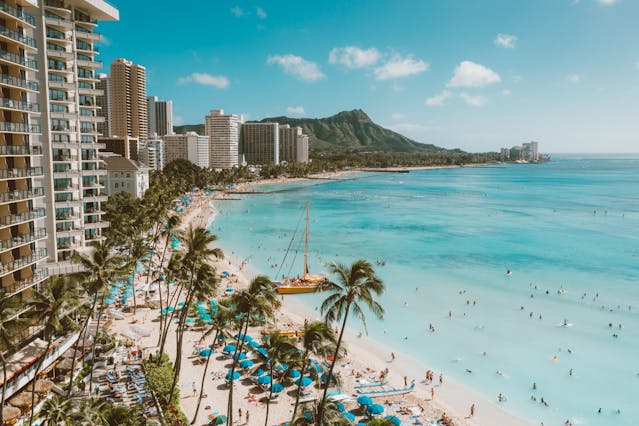
Waikiki is the exception to almost everything else on this page. It contains resort zoning, so it is one of the few places on Oahu where short-term letting is genuinely available, and nightly rates in peak season can be strong. It is also the most regulated and most competitive submarket on the island, with resort-grade operating costs to match. It rewards investors who will actually do the compliance work.
Central And West Oahu
Where the entry prices and the yields are
This is where most investors buying for cash flow end up, and where military demand is most concentrated.
- Aiea — quiet and residential, immediately west of Honolulu and close to Pearl Harbor. A mix of standalone houses and townhouse-style attached homes. Turnover is moderate but demand is consistent, which keeps occupancy predictable.
- Pearl City — inland from Aiea, diverse and largely working-class, near the base and several major shopping centers. More affordable than the urban core, which is what makes the cash flow work.
- Mililani — a planned Central Oahu community with well-regarded schools, parks and a genuinely suburban feel. Mostly single-family homes and townhouses. Reliable tenants and low vacancy are the draw rather than yield.
- Kapolei — Oahu's "second city", still adding housing, retail and offices. Families priced out of town move here for space, so demand is growing rather than merely steady.
- Ewa Beach — rapid recent development and newer construction beside Kapolei. Appeals to military families and younger professionals, with a lower entry price than central Honolulu.
- Ko Olina — resort and gated-community territory on the west coast, with villas and condos usable as high-end short-term or executive rentals. A niche that needs a larger budget and a clear plan.
East Honolulu
Buying equity rather than yield
Kahala is among the island's most affluent neighborhoods, with luxury and beachfront homes and a price point to match. The rental yield rarely justifies the purchase on its own; investors buy here for long-term appreciation and for tenants at the top of the market.
Hawaii Kai is a master-planned community of waterfront homes, townhouses and condos that attracts professionals, retirees and families wanting suburban space. It offers a better balance of appreciation and income than Kahala without leaving the high end.
Aina Haina, between the two, is quieter and more locally-oriented: older, well-kept single-family homes on larger lots, long tenancies, and steady rather than dramatic value growth.
Kaimuki sits just east of downtown near the university, mixing older homes with newer builds along a walkable stretch of local businesses. It draws students, professionals and small families, and single-family homes on larger lots are the opportunity worth looking for.

Windward And North Shore
The other side of the island
Kailua is a windward beach town with a relaxed reputation and a high quality of life, attracting both local and mainland renters who want a quieter setting. Property values are high and demand is durable. Note that the 30-day minimum applies here as it does across non-resort Oahu, so plan for monthly-or-longer tenancies.
Kaneohe, just north, is greener and less expensive than Kailua, which makes it attractive from both sides of the transaction. Marine Corps Base Hawaii provides a steady underlying source of tenants.
Haleiwa on the North Shore is a genuine niche: surf culture, a slower pace, and a long drive from town. Demand comes from tourism and from people working in hospitality, which makes it more seasonal than anywhere else on this list. It suits an investor who wants that specific market rather than one looking for a diversified hold.

Honolulu County is the whole island, which is why "in Honolulu" tells you almost nothing.
That distinction is worth holding on to when you read a listing. The City and County of Honolulu covers all of Oahu, so Kapolei, Kailua and Haleiwa are all "in Honolulu" while being nowhere near urban Honolulu. Zoning and permitting run island-wide; commute times, tenant demand and price per square foot do not. Beyond the areas above, the county also holds rural and agricultural land where development and infrastructure are still arriving — a longer horizon, and a different risk profile.
Quick Answers
Frequently asked questions
Which Honolulu neighborhood is best for a first investment property?
It depends on which return you are buying. For cash flow on a lower entry price, Pearl City, Ewa Beach and Aiea are the areas investors return to most, helped by steady military and local-worker demand. For stability and low vacancy, Mililani and Aina Haina. For appreciation over yield, Kahala and Hawaii Kai. There is no single best area, only the one that matches your strategy.
Can I buy a Honolulu condo and rent it out nightly?
Almost certainly not. The Department of Planning and Permitting defines short-term rentals as lodgings providing guest accommodation for less than 30 consecutive days, and states that STRs are only permitted in resort-zoned areas and a couple of specific apartment-zoned areas, mapped in Ordinance 25-52. Anyone renting a unit in an STR-eligible area for less than 30 days must register it, and the STR must be registered to be in compliance with law. Check the zoning and the building's own house rules before you buy, because an AOAO can prohibit short-term letting even where zoning permits it.
What is the minimum rental period on Oahu?
Under the current Honolulu framework, 30 consecutive days. DPP defines a short-term rental as guest accommodation for less than 30 consecutive days, and requires properties that are not registered STRs to carry the statement that the property may not be rented for less than 30 consecutive days. Registration is only available in the STR-eligible areas. Requirements change, so confirm the current position with DPP for the specific property before you buy.
Which areas attract military tenants?
Aiea and Pearl City for Pearl Harbor and the surrounding commands, Mililani and Ewa Beach for Schofield Barracks and the west side, and Kaneohe for Marine Corps Base Hawaii. Military demand tends to be steady and lease terms predictable, though turnover follows posting cycles rather than the local rental calendar.
Is Honolulu County the same as the city of Honolulu?
No, and the difference matters when you read listings. The City and County of Honolulu covers the entire island of Oahu, so Kapolei, Kailua, Kaneohe and Haleiwa are all in Honolulu County while being nowhere near urban Honolulu. Zoning and permitting are administered island-wide, but commute times, tenant demand and price per square foot are not.
How Hawaii Coastal Property Management fits in
The neighborhood decision and the management decision are the same decision made twice. We work with owners buying their first Oahu rental and with those adding to a portfolio, on what a specific property is likely to rent for, what the zoning actually permits, and what it will cost to run once the keys change hands.
Island roots, mainland precision.
This article is general information, not investment, legal or tax advice, and neighborhood conditions change. Zoning and short-term rental requirements are set by the City and County of Honolulu and should be confirmed with the Department of Planning and Permitting for any specific property before purchase.


