
Key Takeaways
- Security Deposit Limits: In Hawaii, the security deposit is capped at one month’s rent. That ceiling is the same whether the unit is furnished or unfurnished.
- Pet Deposits Are Separate: Where the rental agreement allows a pet animal, HRS §521-44(b) permits an additional agreed deposit of up to one more month’s rent. It is a separate, situational deposit. It cannot be charged to a tenant who has no pet, and never for an assistance animal.
- Security Deposit Return Rules: Security deposits (with an itemized list of deductions) must be returned within 14 days of move-out.
- Compliance Protects You: Clear documentation and following Hawaii’s security deposit laws prevent disputes, penalties, and protect your investment.
Have you ever found yourself wondering how much protection Hawaii’s security deposit laws give you as a rental property owner?
Many Hawaii landlords face challenges when it comes to handling security deposits fairly while also ensuring their investment remains secure. The Hawaii security deposit rules may feel complicated at times, but understanding them clearly can save you from future disputes and financial headaches.
In Hawaii, landlords need to follow specific legal guidelines about how much they can collect as a security deposit, how security deposits should be used, and when security deposits must be returned. With Hawaii Coastal PM by your side, navigating these details becomes a smooth and stress-free process. Reach out to us today to get started.
A Guide to Hawaii’s Security Deposit Laws
What’s the Maximum Security Deposit Amount You Can Legally Collect?
Under HRS §521-44(b), the security deposit is capped at one month’s rent. That means if your property rents for $2,500, your security deposit limit is $2,500. There is no higher ceiling for a furnished unit, a shorter lease, or a tenant you consider higher risk. One month’s rent is the limit. Knowing this helps you avoid legal pitfalls and keeps things fair and predictable.

The one additional deposit the statute allows is for a pet. If the rental agreement permits a pet animal to reside in the unit, HRS §521-44(b) allows an additional deposit, in an amount agreed between you and the tenant, to cover damage caused by that pet. Three limits apply:
- It may not exceed one additional month’s rent (§521-44(b)(2)).
- It may not be required from a tenant who does not have a pet animal residing in the premises (§521-44(b)(1)(A)).
- It may not be required for an assistance animal that is a reasonable accommodation for a tenant with a disability under HRS §515-3 (§521-44(b)(1)(B)). An assistance animal is not a pet, and treating it as one is a fair housing problem as well as a deposit problem.
On that same $2,500 rental, then: a tenant with no pet is asked for a $2,500 security deposit. A tenant whose lease permits a dog may be asked for the $2,500 security deposit plus an agreed pet deposit of up to $2,500. A tenant with an assistance animal is asked for the $2,500 security deposit only.
Staying within these limits protects you from potential claims of overcharging tenants. It also gives clarity right from the start: tenants know what to expect, and you as a landlord don’t risk having to refund extra or face legal penalties.
Can I Collect First Month’s Rent, Last Month’s Rent, and a Security Deposit?
Not at lease signing. HRS §521-44(b) states that a landlord “may not require or receive from or on behalf of a tenant at the beginning of a rental agreement any money other than the money for the first month’s rent and a security deposit as provided in this section.” The mainland habit of collecting first, last, and security up front does not carry over to Hawaii. The first month’s rent and the security deposit (plus a lawful pet deposit where one applies) are the whole of what you may collect at the start of the tenancy.
There is one narrow provision about last month’s rent, and it is frequently misread. The same subsection says that no part of the security deposit is treated as payment of the last month’s rent unless it is mutually agreed upon, in writing, by the landlord and tenant, and the tenant gives 45 days’ notice of vacating the premises. That is not permission to collect an extra month up front:
- It governs the deposit you are already holding, allowing it to be applied to the final month’s rent. It does not authorize an additional prepaid last month’s rent at signing.
- It requires a written, mutual agreement with the tenant.
- It is conditioned on the tenant giving 45 days’ notice of vacating.
- Entering into that agreement does not waive your right to pursue the tenant for damages the tenant causes.
Note that the 45 days in this provision is the tenant’s notice of vacating. It is a different rule from the 45 consecutive days’ written notice a landlord must give to raise the rent on a month-to-month tenancy under HRS §521-21(d). Neither one creates a right to collect prepaid last month’s rent at move-in.
The practical version for owners: quote the first month’s rent and the deposit, and keep any last-month arrangement out of the move-in ledger.
Acceptable Uses of a Security Deposit
In Hawaii, your security deposit may be used to cover unpaid rent, repair damage caused by residents beyond normal wear and tear, and clean the property if needed.
A landlord cannot use a security deposit for routine maintenance or to cover unpaid utilities unless the rental agreement specifies those utilities as the landlord's responsibility. Being crystal clear about what qualifies saves confusion later, keeps documentation clean, and helps both you, as the landlord, and your tenants stay on the same page.
Clearly define acceptable deposit deductions in your rental agreement, outline expectations for property conditions, and keep good records. That way upon lease termination or when a tenant moves out, you can point to documented reasons for any deductions, and tenants understand they’re fair.
Clear Guidelines for Returning Deposits
Hawaii law requires landlords to provide an itemized list of damages plus any remaining security deposit funds within 14 days after a tenant moves out. Whether your property is on Kauai or in the heart of Honolulu, meeting that deadline helps you avoid disputes or statutory penalties.

Prompt, transparent handling builds trust and limits exposure to legal claims. If something’s withheld, the itemized list explains it. If nothing’s due, returning security deposits quickly reinforces your professionalism and keeps your landlord-tenant relationships positive.
If you fail to meet the 14 day deadline, you may face penalties under Hawaii law, potentially costing you more than just the security deposit. Being prompt protects your reputation and finances. Plus, by setting clear expectations in the lease about your process, you reduce tenant uncertainty and keep things running smoothly.
Documenting Property Condition Effectively
In Hawaii, having detailed records of the property’s condition before and after a resident’s stay is your strongest protection, and one of the reasons why regular inspections should be a priority.
A thorough move-in inspection report, paired with dated photos or videos, ensures you can prove what was already there and what was caused during residency.
When a tenant moves out, as the landlord, you can fairly justify security deposit deductions. For landlords in places like Hilo or Honolulu, Hawaii, this simple step keeps disagreements from escalating and makes your security deposit refund process much smoother.
Handling Deductions Without Disputes
Hawaii security deposit law allows deductions for unpaid rent, damages beyond normal wear and tear, and cleaning costs, but deductions must always be itemized. A vague statement like “general damage” won’t hold up, and it creates unnecessary tension with tenants. This can lead to the tenant creating a dispute to fight vague charges.
As a landlord, you should provide a clear, written list with actual costs and receipts when possible. Transparency helps tenants see deductions as justified rather than unfair. That clarity saves time, money, and possible legal headaches.
Protecting a Furnished Rental With Proper Documentation
Furnishing a unit does not raise the ceiling. A furnished rental is subject to the same one-month security deposit cap as any other residential rental, because HRS §521-44(b) draws no distinction between furnished and unfurnished units.
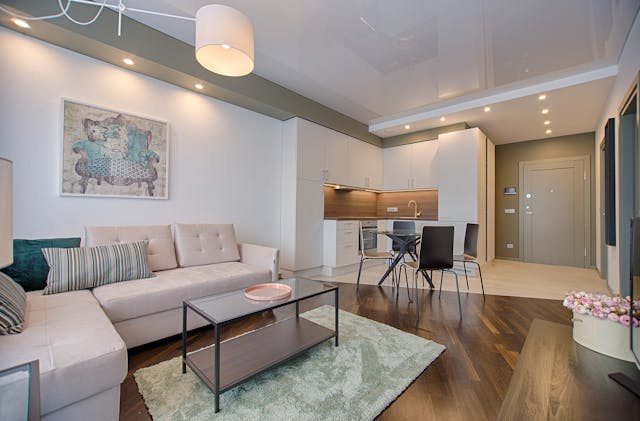
Since the deposit does not stretch to cover the added risk, documentation is what actually protects a furnished property. Before the tenant takes possession:
- Prepare a written inventory of every furnished item and supplied appliance, with a description, and the make or model where it matters.
- Record the condition of each item at move-in, including any wear, chips, stains, or damage that already exists.
- Take dated photographs or video of each room, and of individual high-value pieces on their own.
- Have the tenant sign or otherwise acknowledge the inventory and condition record, and give the tenant a copy.
- Repeat the same walkthrough at move-out so the two records can be compared item by item.
If you’re renting out a furnished condo, this record is what lets you show which damage occurred during the tenancy and justify a deduction from the one month’s rent you are allowed to hold.
Penalties for Not Following the Law
In Hawaii, landlords who fail to return security deposits or provide proper itemized deductions within fourteen days risk losing the entire security deposit claim. In some cases, you could even be required to pay additional damages to the tenant.
Compliance is always simpler than facing penalties. By following Hawaii’s security deposit laws step by step, you protect your income and avoid disputes. Staying informed about Hawaii security deposit laws keeps your rental business professional and ensures your reputation remains strong across the islands.
Next step? Read our post on Hawaii’s landlord-tenant laws.
Bottom Line: Protect Your Investment with Confidence
Mastering Hawaii’s security deposit laws is essential for protecting your rental property and avoiding costly disputes. From understanding limits to meeting refund deadlines, every detail matters.
That’s where Hawaii Coastal PM steps in.
Our team helps landlords handle deposits correctly, document property conditions thoroughly, and maintain strong tenant relationships. With expert guidance, you can safeguard your investment while keeping the process stress free. Reach out to Hawaii Coastal PM today to discuss what approach fits your property best.
Disclaimer: This blog should not be used as a substitute for legal advice from a licensed attorney in your state. Laws frequently change, and this post might not be updated at the time of your reading. Please contact us for any questions you have in regards to this content or any other aspect of your property management needs.