
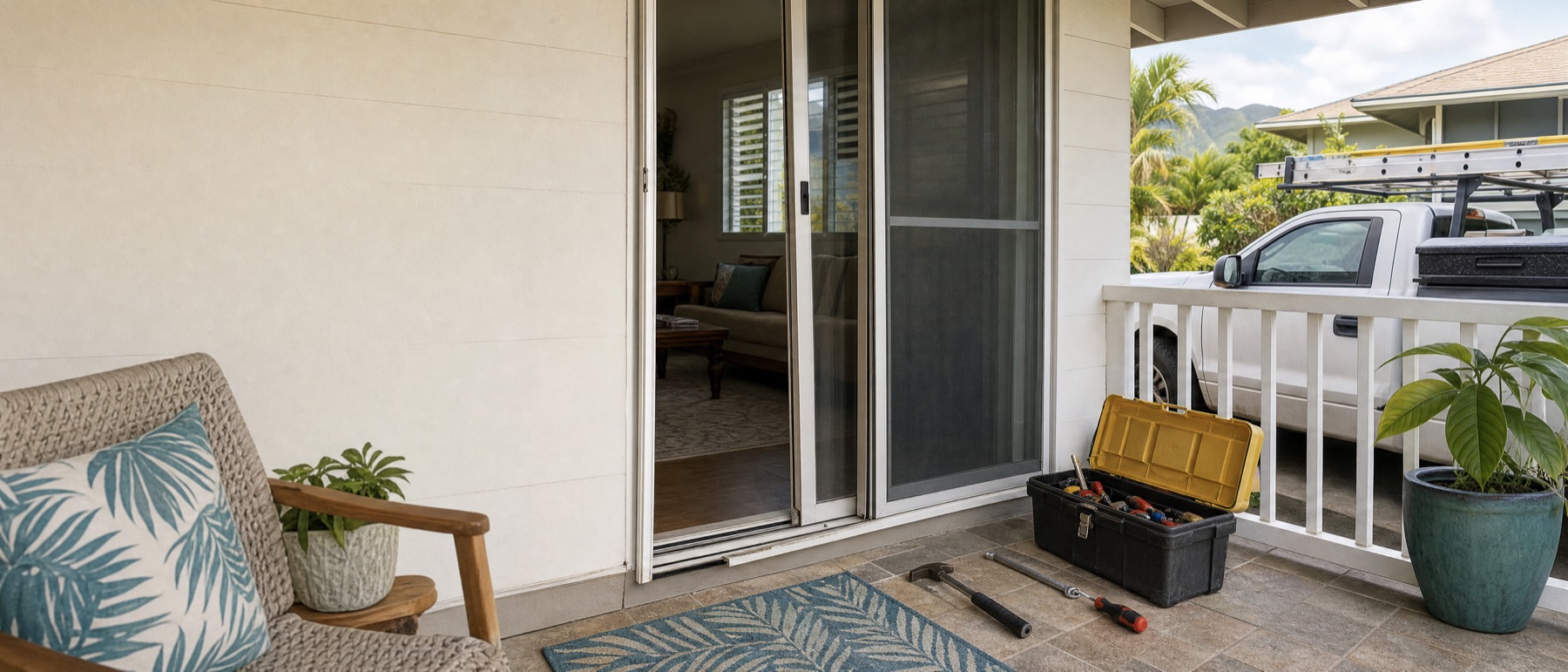
The phone call
There's a particular kind of phone call we get at the office, and after enough years, you recognize it inside thirty seconds.
The caller is calm. He has a small problem. He just needs a handyman, and he doesn't want to spend much, because, you know, it's a little thing.
Then he keeps talking.
And as he keeps talking, the small thing turns out not to be the problem. The small thing is the symptom of a larger problem, which is that he has, over the past several months, fired four handymen.
We'll call him Dan. Dan owns a furnished rental in Kailua. On the morning he called us, his sliding lanai door had slipped its track, and the trade winds were pouring through the gap. He wanted, in his words, "just somebody to put it back on the track." He was not, he wanted me to know, looking to spend $700 or $1,200 on it.
The reason he was calling us was that the four handymen he'd hired before were no longer answering. They weren't answering because, in each case, he had run them off.
Part OneThe first four trucks
Dan's cast of characters is worth walking through.
The first was building a pergola over the lanai. The second was repairing a staircase. The third was hanging interior doors. The fourth was installing a storm door, and measured wrong, so the door arrived in the wrong size. Dan described him as "just a rough carpenter," which is a phrase that does a lot of work in a sentence. The fifth was painting the front door.
None of them finished.
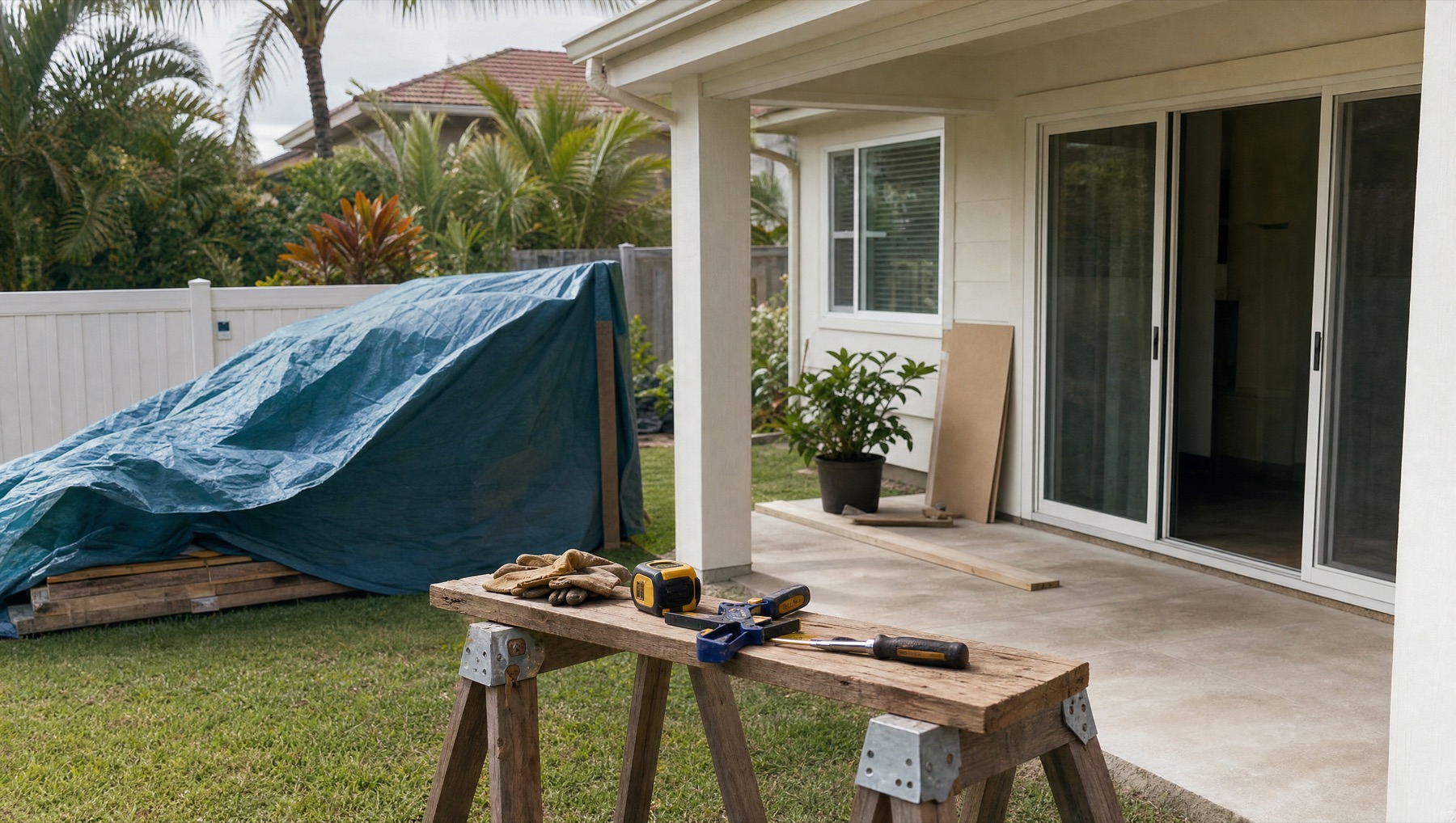
By the time the slider slipped, the house contained an unfinished pergola, a not-quite-right staircase, a wrong-sized storm door, an unpainted front door, and a slider venting the back yard into the living room. Five open jobs. Four handymen no longer returning calls.
There's a particular kind of optimism required to fire your fourth handyman and assume the fifth will be different. But Dan's call wasn't really about optimism. It was about cost. He was confident that if he shopped the hourly rate down long enough, he'd find somebody good for cheap.
This is the trap. Almost every property owner falls into it at least once.
Part TwoWhat the two-hour minimum is really buying
Here's the odd thing about labor that comes to your house.
You hire a handyman. You watch him work for twenty minutes. He puts the slider back on the track, tightens four screws, and he's done. The invoice says $150.
This feels wrong. So you do what humans do, which is try to negotiate.
But the twenty minutes wasn't what you were buying. What you were buying was the truck that got loaded at the shop before he left. The drive over the Pali with shims and clamps and three sizes of replacement hardware in case the part on your slider is a quarter inch off from standard. The stop at the hardware store on the way. The invoicing afterward. The phone call you'll make in three weeks, and the second trip out at no charge to tighten the screws.
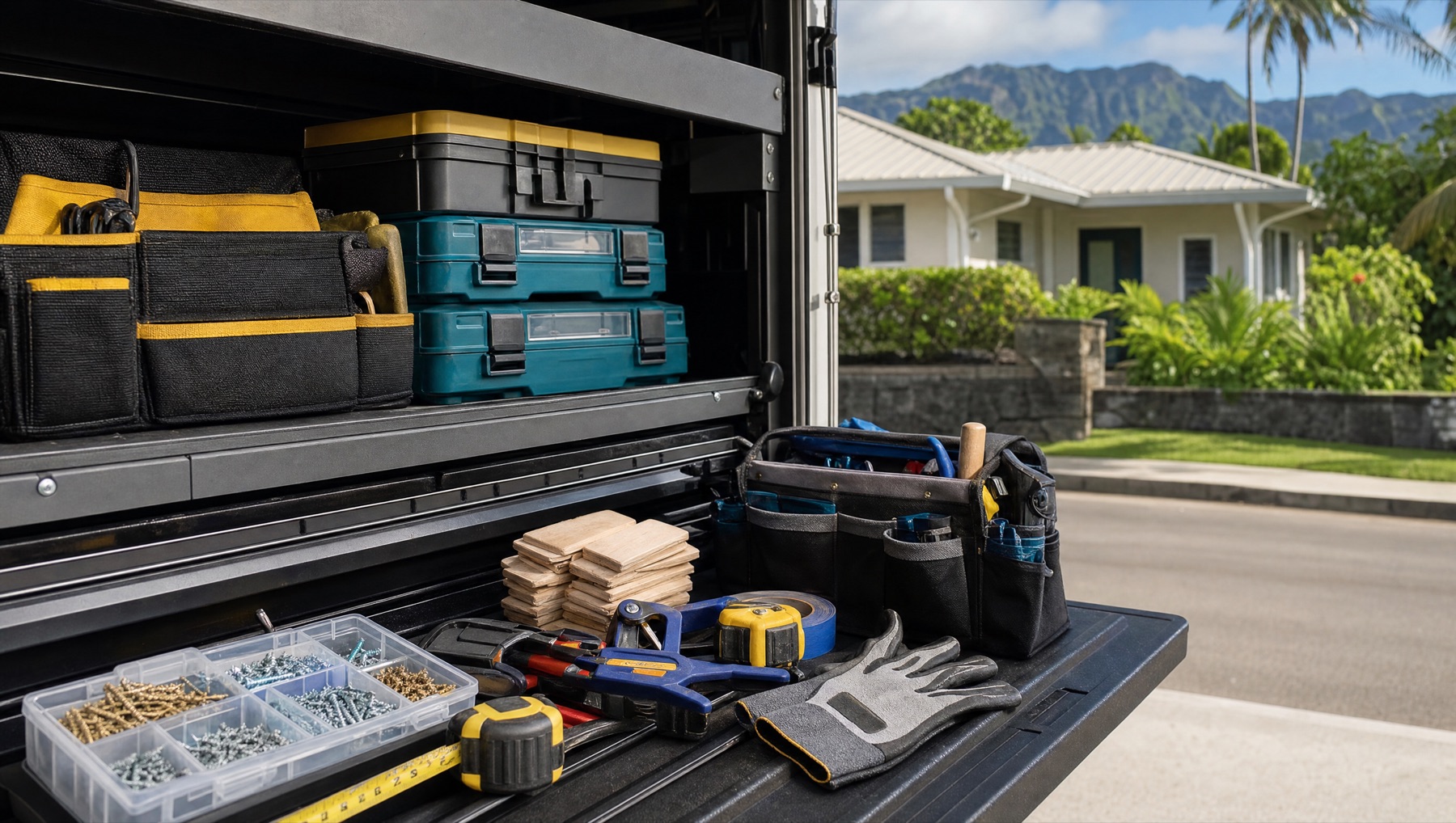
"The two-hour minimum isn't a markup. It's the floor at which a real tradesman can keep showing up.
Negotiate that floor down, and you don't get the same service at a discount. You get a different service entirely. You filter, almost surgically, for exactly the people Dan kept ending up with.
Part ThreeThe limit nobody tells you about
There's one more piece a lot of mainland-trained owners don't realize when they move over.
In Hawaii, "handyman" isn't a licensed trade. The state's contractor licensing structure has a small-job exemption, but it has hard limits. A handyman cannot legally do your electrical work. A handyman cannot legally do your plumbing work. And the total value of work a handyman can complete on a single property within a year is capped under the relevant statute. The figure shifts over time, so confirm the current threshold with your broker or a licensed contractor before scoping anything bigger.
The good handymen on Oahu know exactly where their lane ends. They route what isn't theirs. The ones who say "sure, I can handle that" when the work is clearly past their lane are usually the ones you don't want on your property.
This is part of why our team is careful about who we send to a house. The handymen we recommend keep small jobs small.
The big takeaway
When you find a good handyman on Oahu, the one who answers the phone, shows up when he said he would, charges what he quoted, and tells you when a job is outside his lane, do not negotiate him down. Pay the rate. Tip when the work is excellent. Send him to your neighbor.
Dan is on his fifth handyman, an unfinished pergola, and a slider held together with hope. He'd have been further ahead, and cheaper overall, if he had hired the most expensive handyman on the island the first time.
"Cheap is fine when you're buying paper towels. On a house in the Hawaiian salt air, where everything corrodes faster than you think, cheap is almost always the most expensive thing you can choose.
Mahalo.


